MEND
RECOVERING FROM AN INJURY CAN BE DIFFICULT. STAYING MOTIVATED SHOULDN'T BE.
I was the lead product designer for this mobile-first web-app which transforms physical therapy into a rewarding experience through real-time progress tracking via physical therapist integration and in-app gamification.
of people found each individual feature to be motivating
increase in overall motivation levels
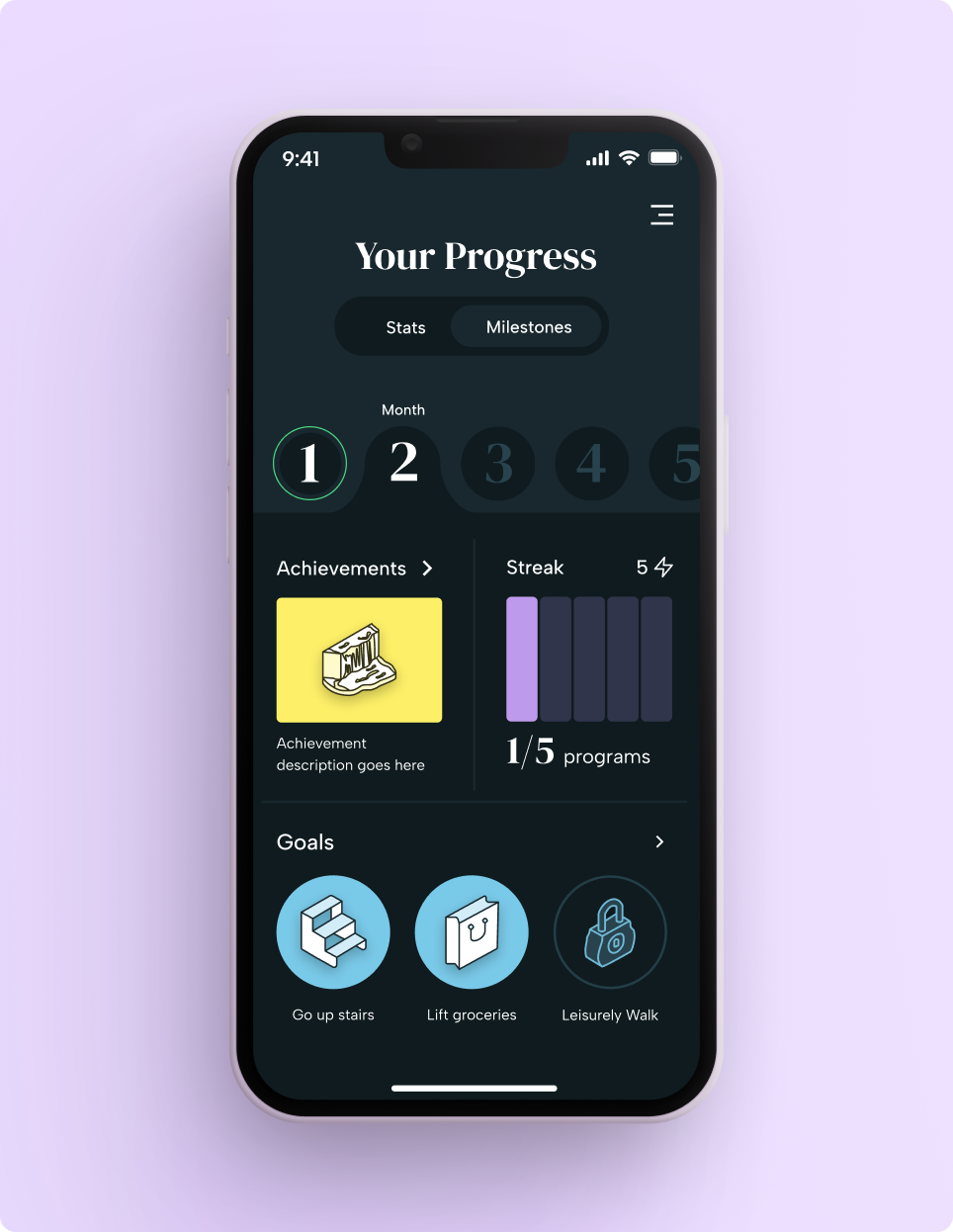
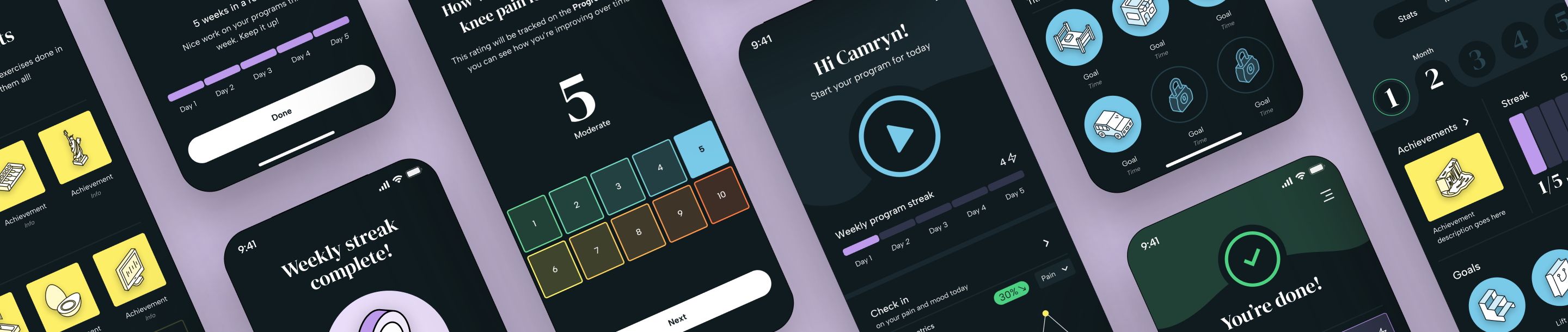
PROBLEMS & PAIN POINTS ADDRESSED
90% of patients recovering from first-time or recurring injuries lack motivation, and 0% of them see any progress data related to their recovery — yet physical therapists have many motivational techniques and are constantly tracking progress data. So what’s missing?
PAIN POINT 01
Clinics offer only paper packets or basic apps with exercise videos, leaving patients without enough at-home support
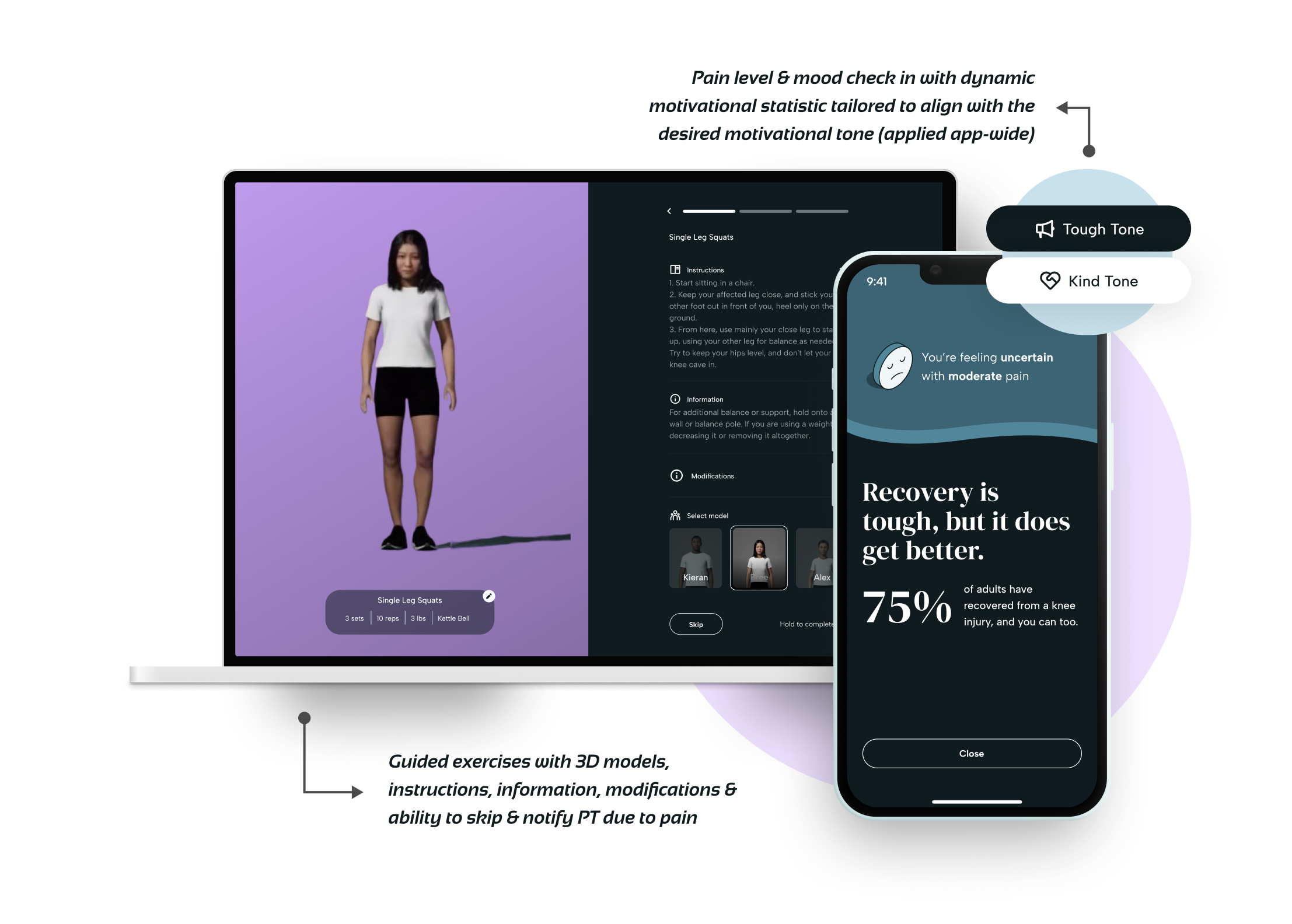
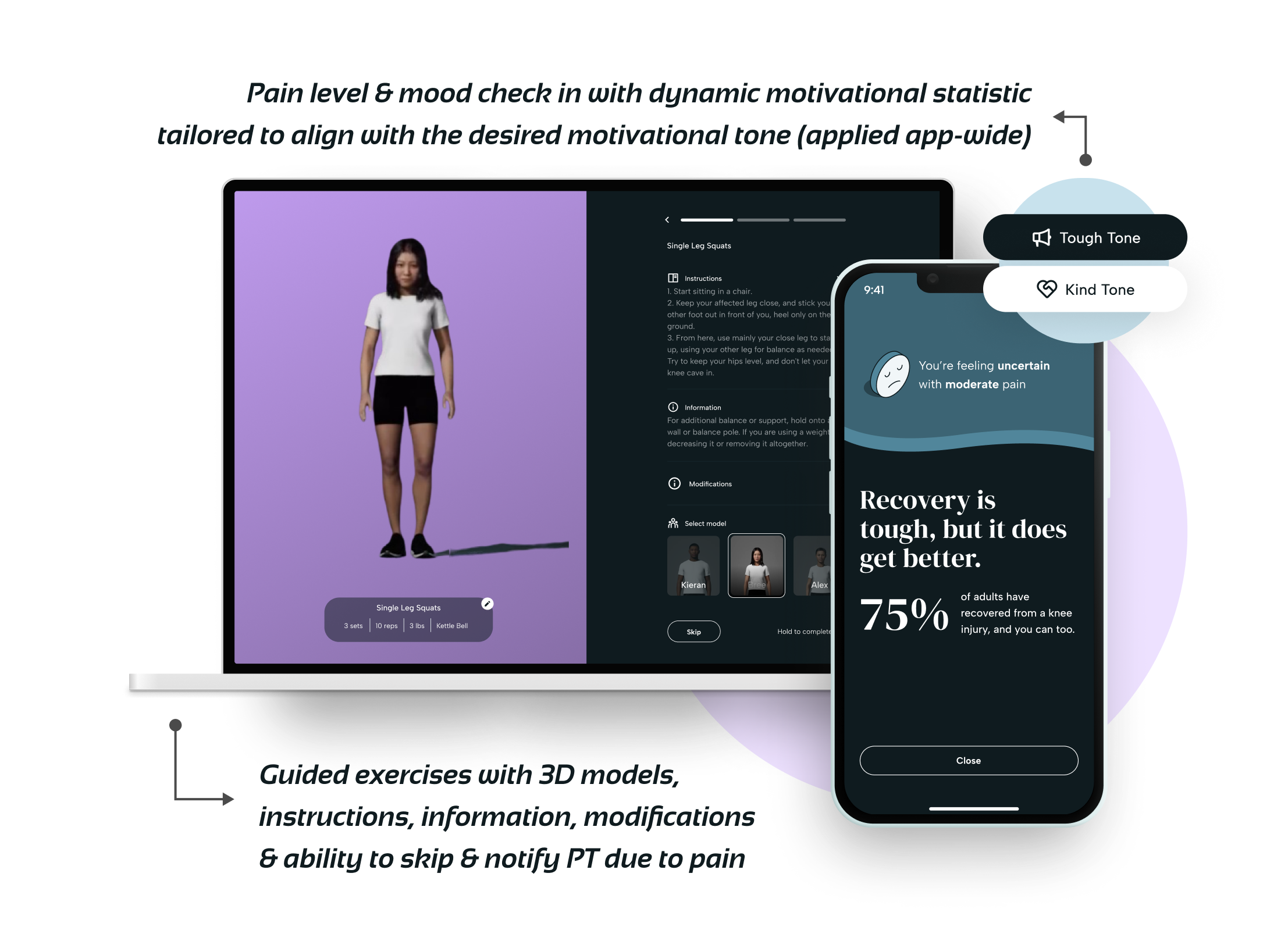
PAIN POINT 02
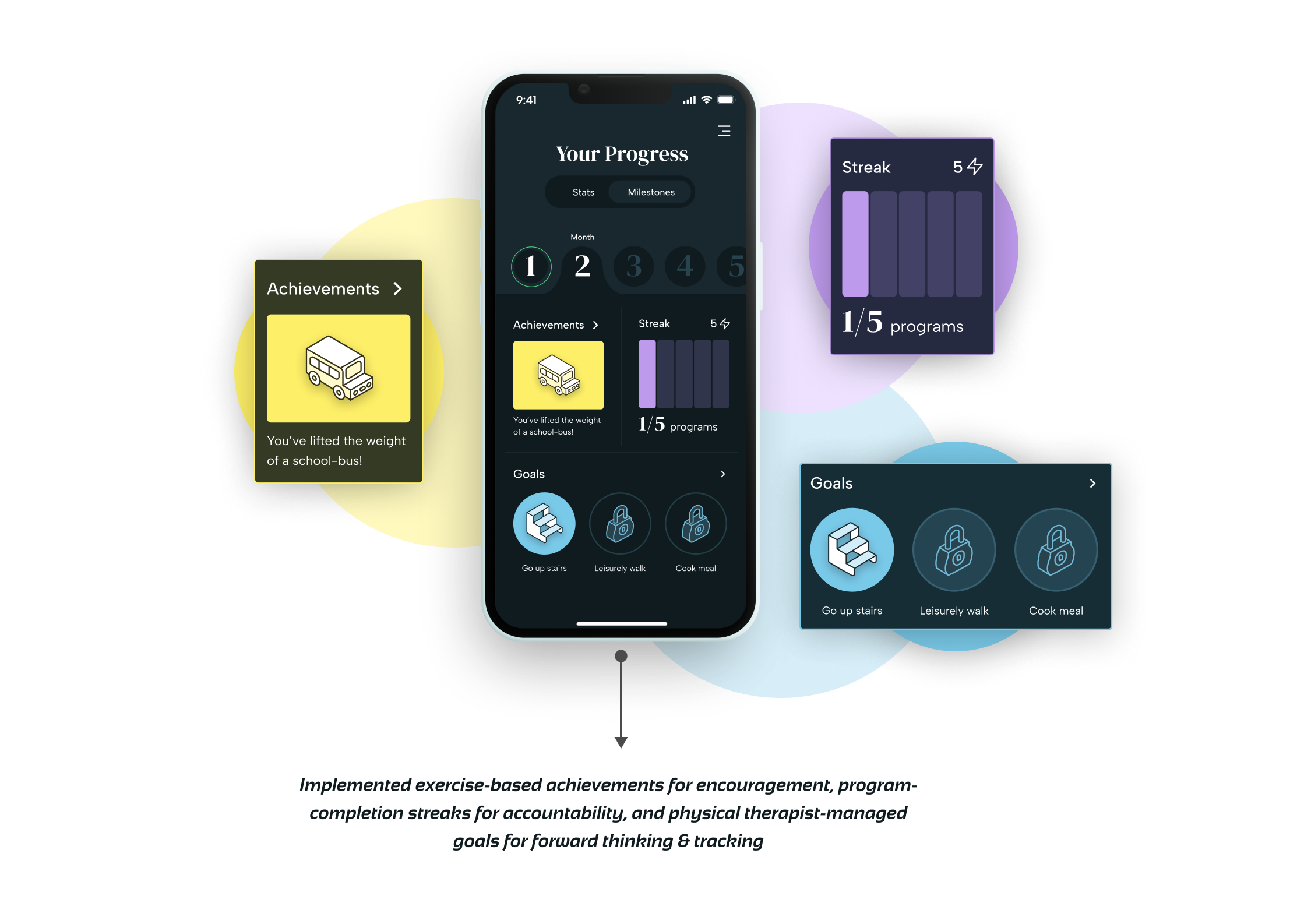
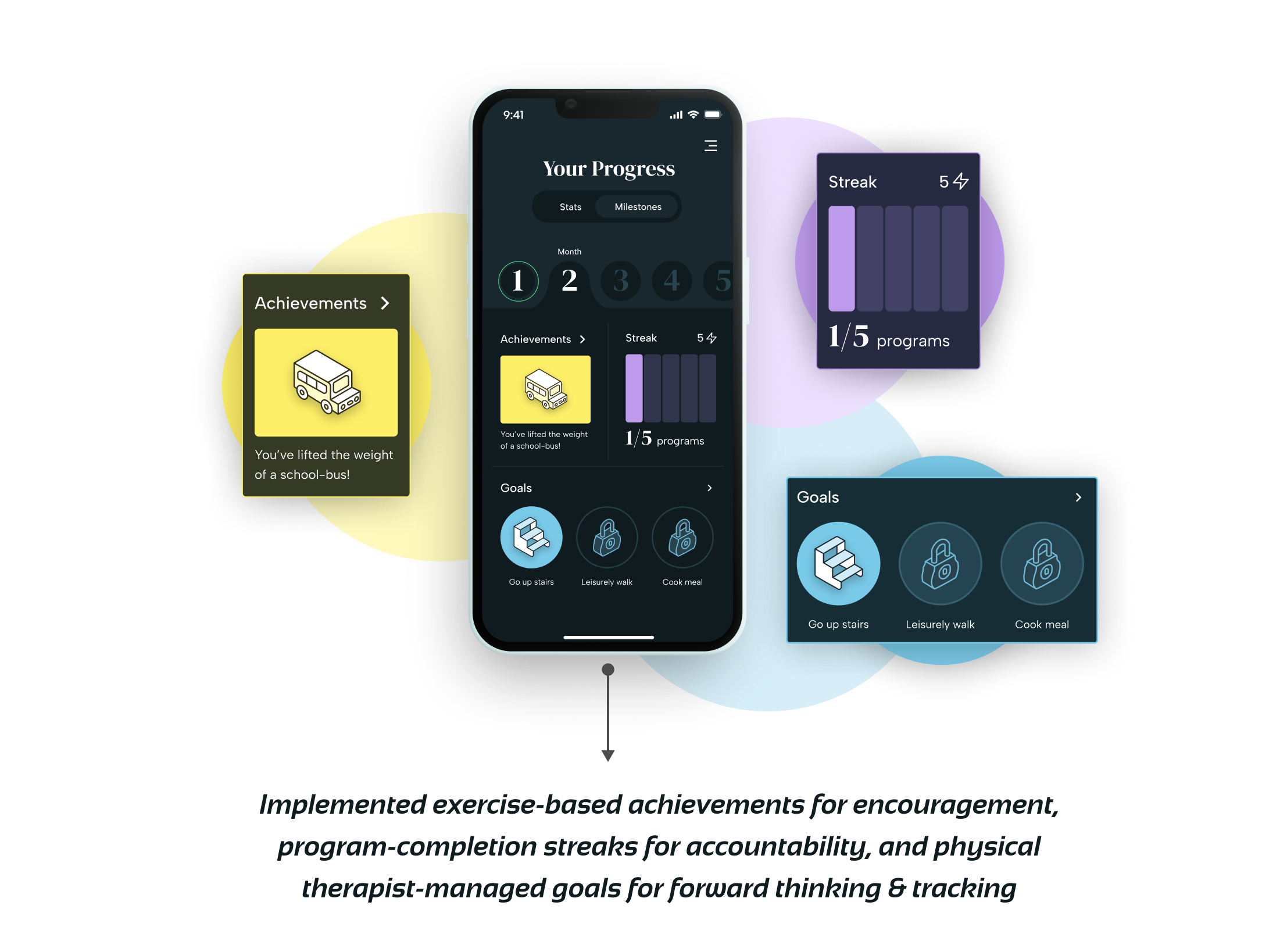
Physical therapists can’t encourage patients at home, and paper packets lack motivation — but patients need help staying accountable
PAIN POINT 03
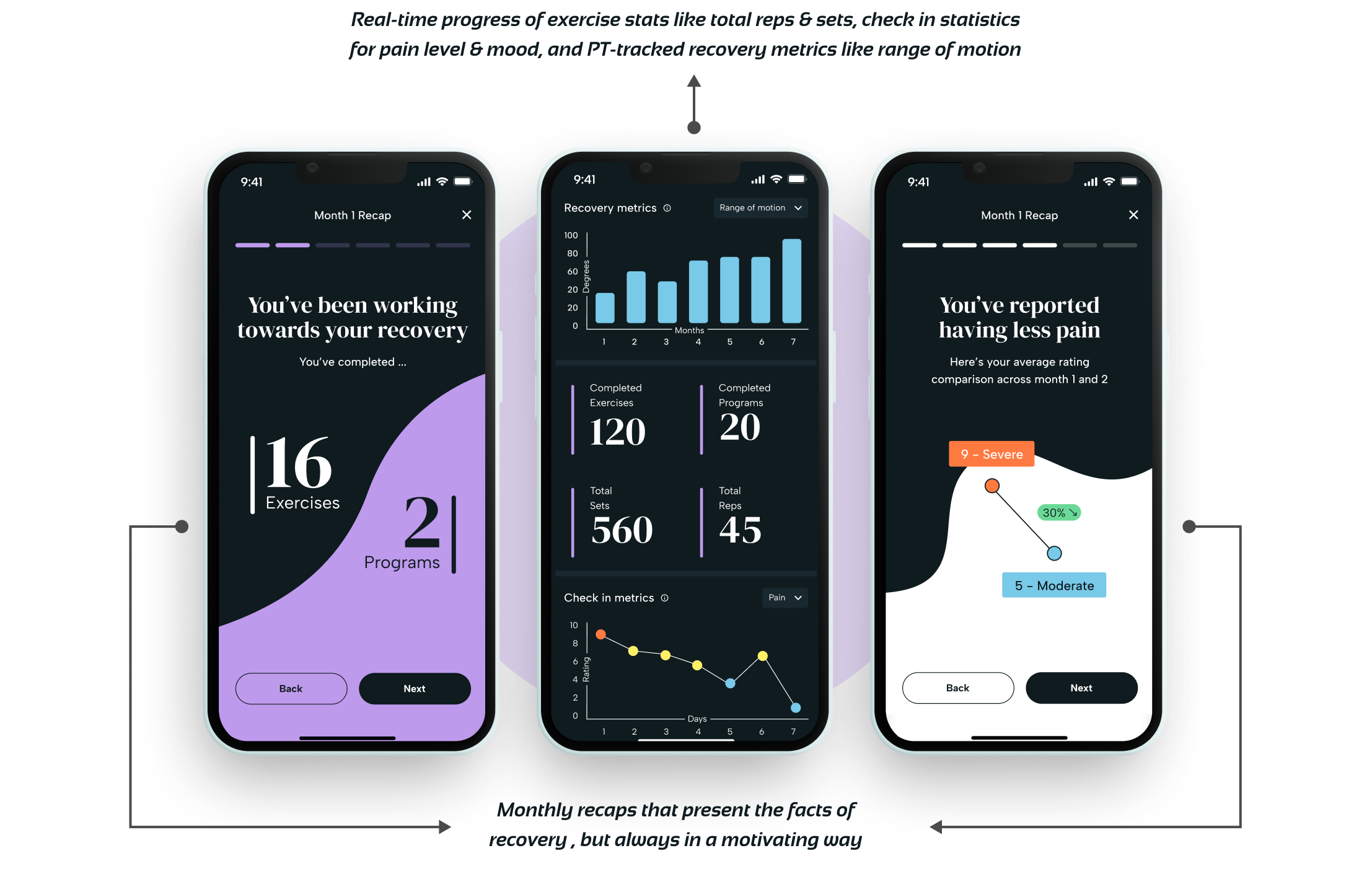
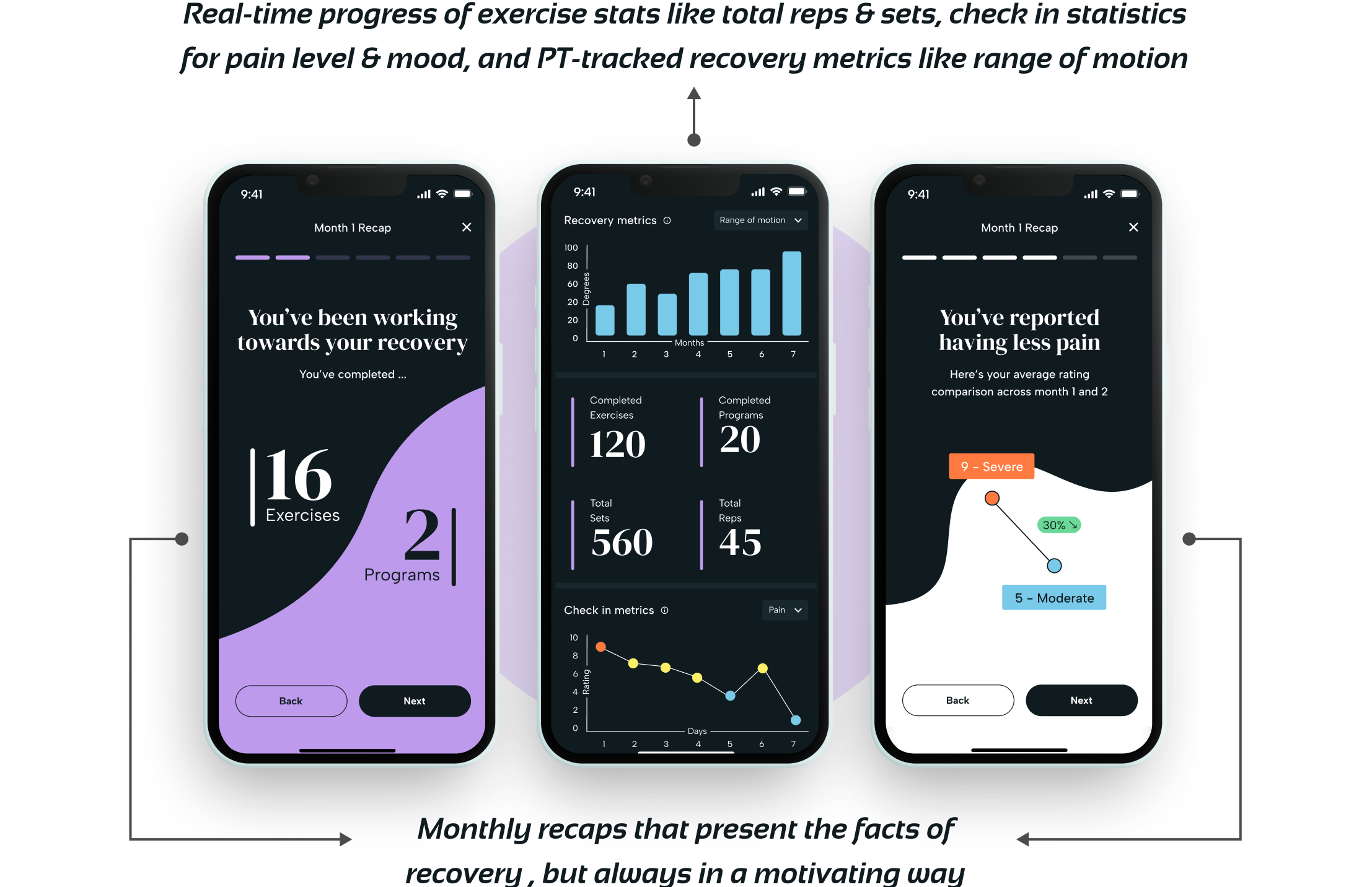
Physical therapists track multiple progress data points for recoveries in their documentation platforms, yet patients don’t get to see any of it
LEARNINGS
DESIGNING FOR EMOTION IS AS CRITICAL AS DESIGNING FOR FUNCTION.
This project highlighted that even the most well-structured experiences can fall short if they don’t account for users emotional responses while using them. Motivation, progress, and recovery are emotional journeys just as they are physical. By designing features that recognized and more importantly, responded to users emotions — like gamification, tone-sensitive feedback, and visualized progress — I was able to recognize how much more engaging and impactful a product can become. This reinforced that emotional design isn't an add-on; its fundamental to creating meaningful and lasting experiences.