WORDFOR
HELPING BILINGUAL AND MULTILINGUAL SPEAKERS FIND THE *WORD FOR WHAT THEY WANT TO SAY
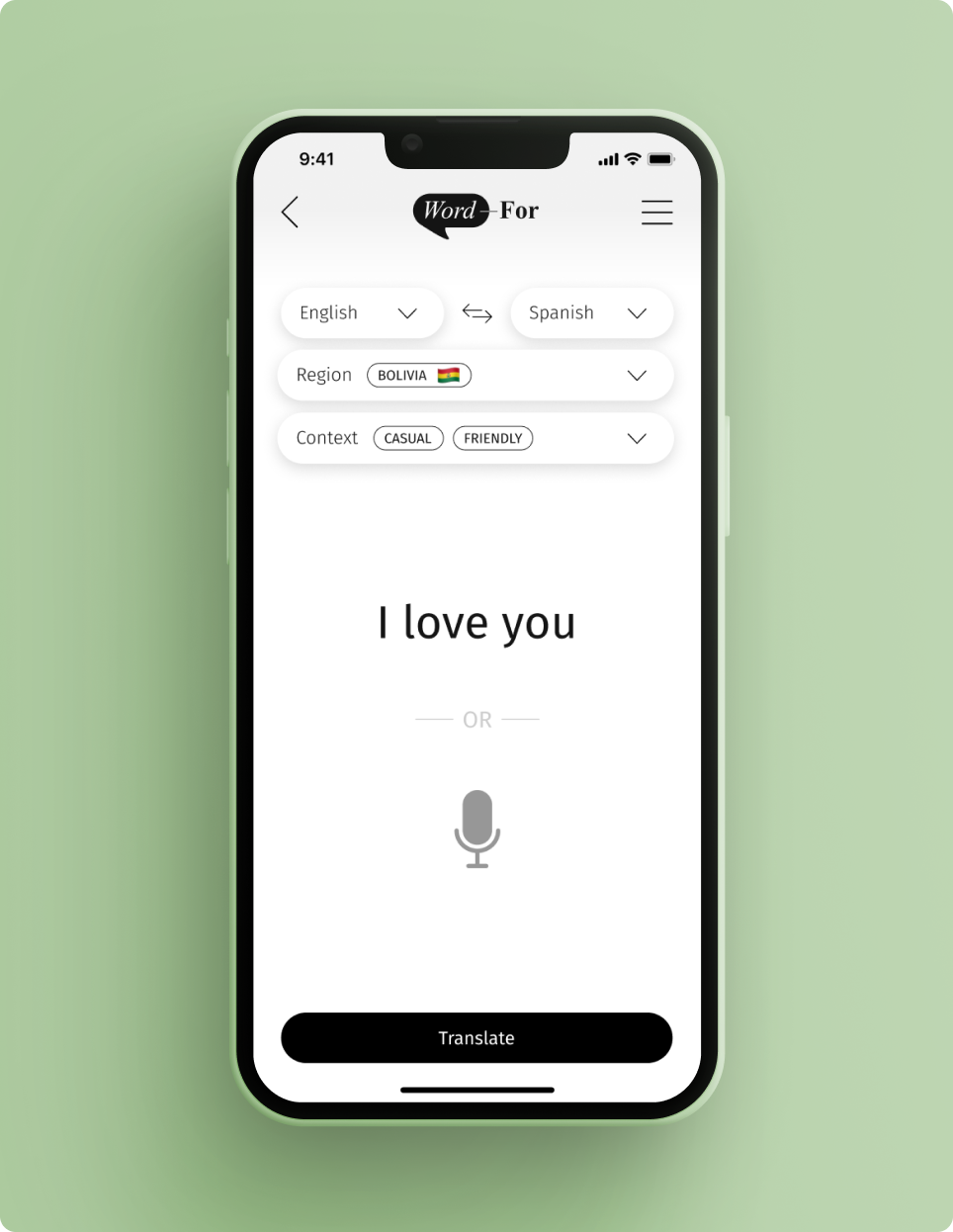
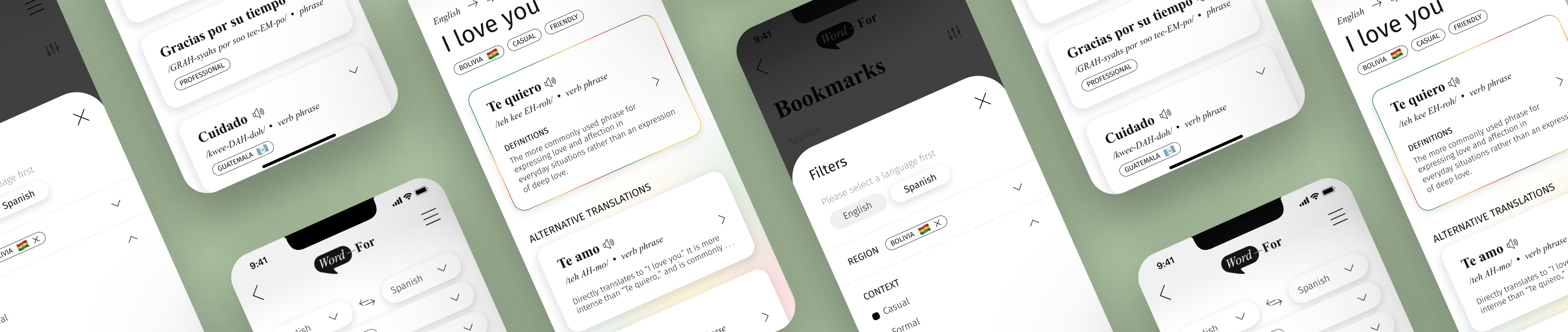
I was the lead designer for this mobile-first web-app which allows translations with regional-based searches to ensure the highest accuracy and multiple results because no two situations are the same.
rated WordFor higher than Google Translate for both accuracy and usability
rated WordFor > 8 for both accuracy and usability
PROBLEMS & PAIN POINTS ADDRESSED
Multilingual speakers have difficulty expressing feelings and sentiments accurately across different languages. Why? Translation tools today don’t consider cultural and contextual nuances that are essential for providing accurate translations.
PAIN POINT 01
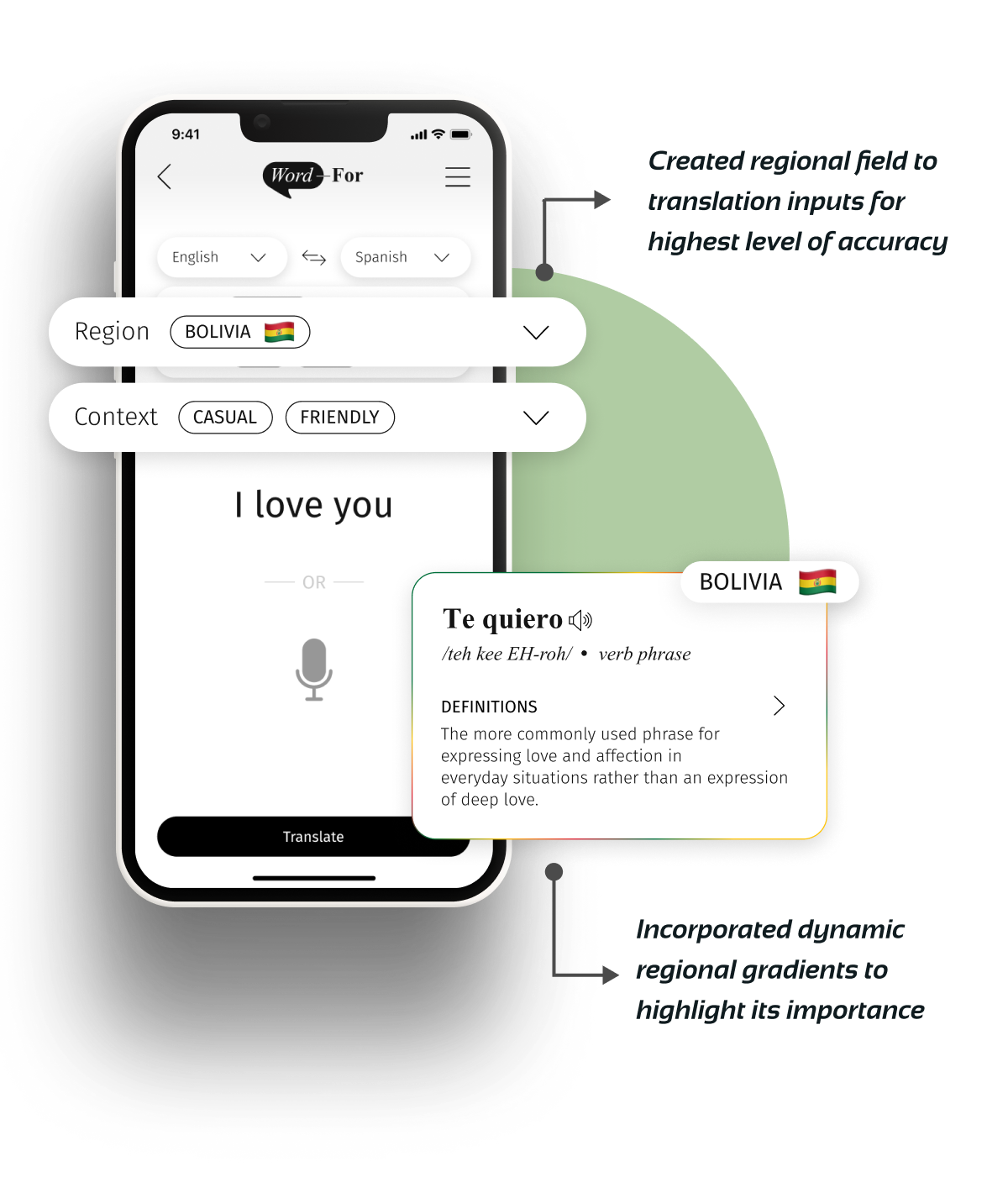
Apps don’t accommodate language change based on region
PAIN POINT 02
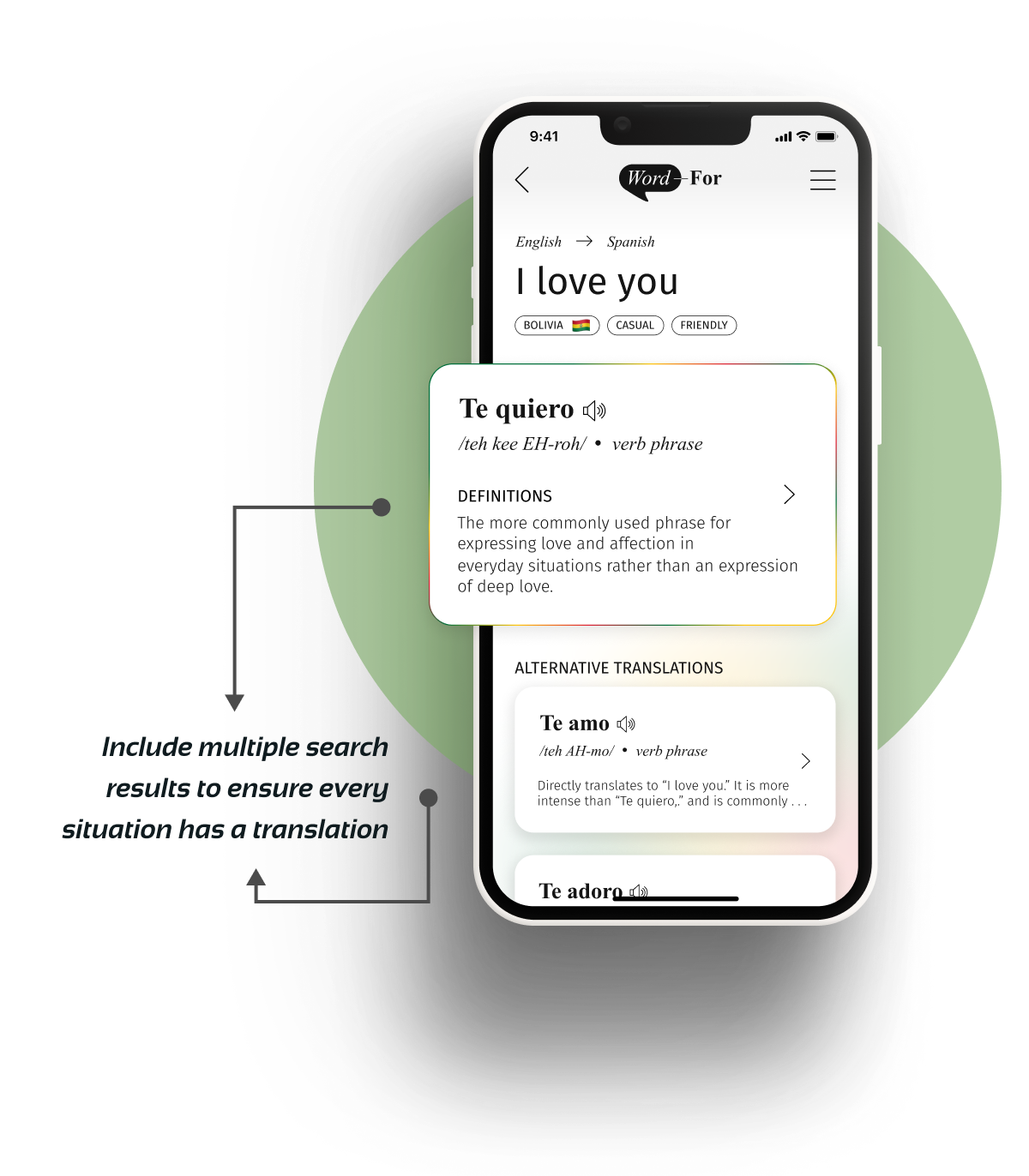
Apps only provide one result, and sometimes it isn’t right
PAIN POINT 03
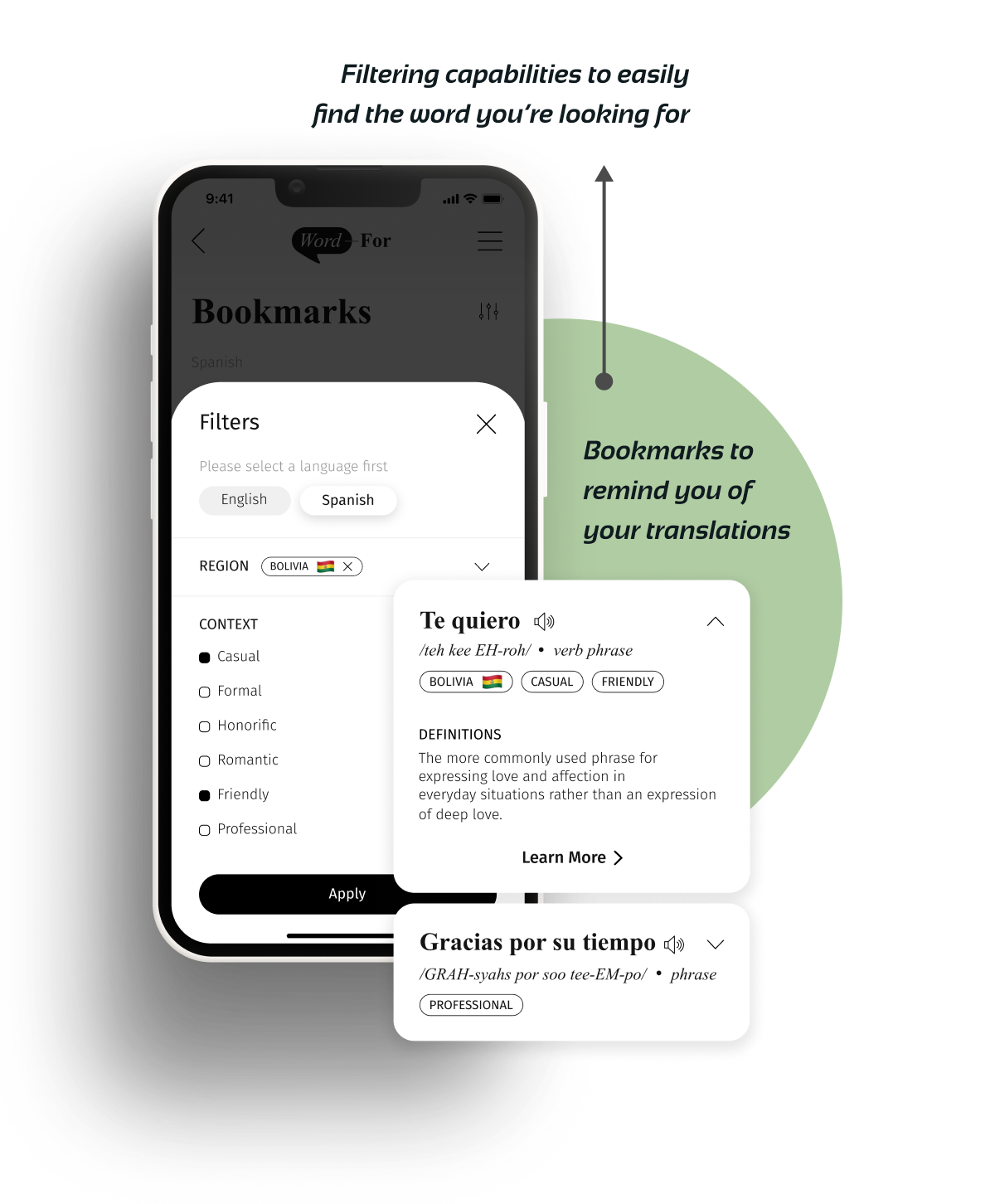
The same words are forgotten and always need to be re-researched
PAIN POINT 01
Apps don’t accommodate language change based on region
PAIN POINT 02
Apps only provide one result, and sometimes it isn’t right
PAIN POINT 03
The same words are forgotten and always need to be re-researched
LEARNINGS
SOMETIMES INDUSTRY STANDARDS NEED TO BE BROKEN IN ORDER TO INNOVATE.
Our main competitors are leaders in language: Google Translate and Papago. They set the standard for contextual and one-size-fits-all translations but left multilingual speakers unable to communicate. We redefined the standards by providing multiple regional-based translations, achieving increased user satisfaction and higher usability and accuracy ratings than Google Translate.